30th Oct 2026
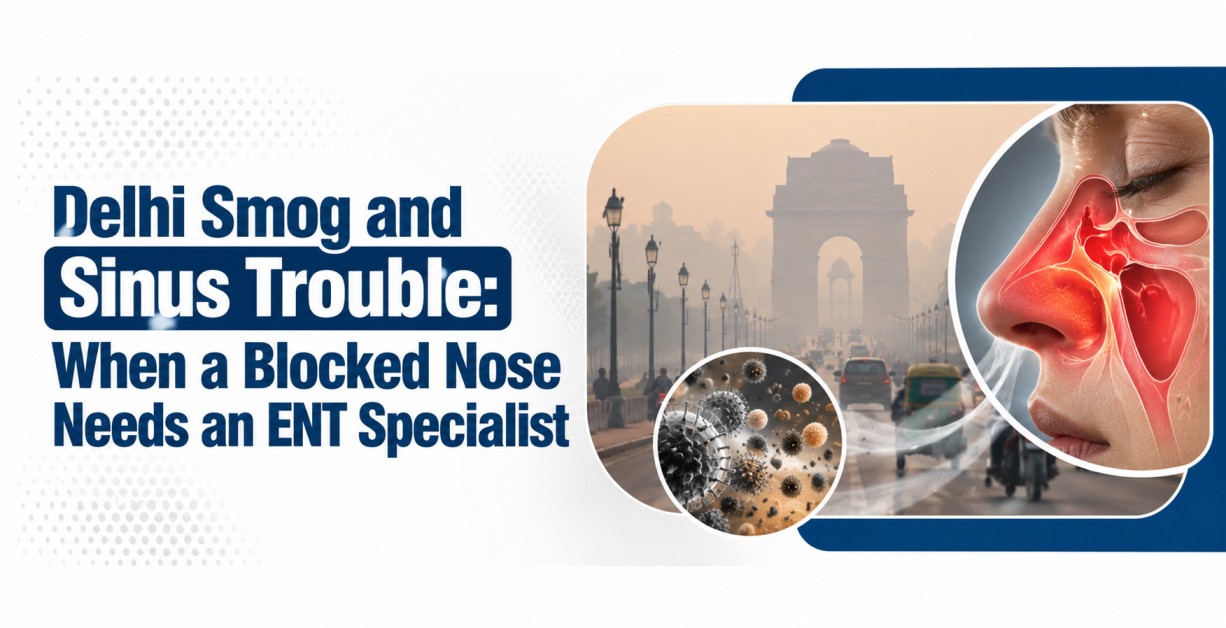
Delhi is experiencing a foggy morning. You wake up with a nose blocked with stuffy mucus, thinking it is just an ordinary cold. While a week passes by, and then another, you think, is it just a cold?
You may have opted for steaming, saline solution, or that old nasal spray that has been there in a cupboard just to relieve your blocked nose from the stuffy mucus. Meanwhile, the fog appears to be getting denser.
But here is the matter: this may not just be an ordinary cold. It could also be sinusitis with the smog making things worse than usual.
What should you do?
Why Delhi's Air Leaves Your Nose Blocked All Winter
Every year, as winter sets in and the AQI climbs, many people in Delhi start complaining of the same thing: a nose that just won't clear. If that sounds familiar, you're not imagining it. Air pollution is a well-recognised irritant for the airways, and your nose is the first to take the hit.
How pollution affects your nose and sinuses
Your nasal cavities have a delicate thin layer that catches dust particles and germs before they hit your lungs. Smoke particles and fine dust particles in air cause irritation of this layer.
When it gets irritated, it swells. You can imagine it the same way you imagine a swelling eye due to the passage of dust.
Air-filled spaces behind your eyes, cheeks, and forehead are called sinuses, and they have very small openings leading to outside.
When the layer swells, the opening can become smaller and smaller so mucus cannot find the way out.
So you will notice a heavy fullness and pressure, as well as continual nasal congestion.
Pollution, allergy or infection?
A blocked nose doesn't always mean sinusitis. Here's a quick way to tell the usual suspects apart. It's only a guide, so an ENT specialist's examination is the only way to be sure.
| Common cold | Allergic rhinitis | Sinusitis | |
|---|---|---|---|
| Usual duration | 7–10 days | Weeks, often seasonal | 10 days to 12+ weeks |
| Key signs | Sneezing, sore throat | Itchy eyes, clear watery discharge | Facial pressure, thick discharge, reduced sense of smell |
If your symptoms look more like the last column, or they simply aren't settling, it's worth getting checked rather than waiting it out.
Sinusitis Symptoms You Shouldn't Ignore
A blocked nose on its own is common in a Delhi winter. But when it comes with a few other signs, your sinuses may be inflamed. Knowing what to look for helps you act on time.
Acute vs chronic sinusitis
The main difference is how long it lasts.
- Acute sinusitis: usually settles within about 4 weeks, often after a cold or an allergy flare-up.
- Chronic sinusitis: symptoms stay for 12 weeks or more, or keep coming back.
Common symptoms
Sinusitis typically presents with some combination of these symptoms:
- Pain or pressure felt in the sinus areas
- Thick green or yellow mucus produced in the nose
- Mucus production that flows down the back of the throat and causes coughing
- Loss of smell or taste
- Headaches that worsen with bending forward.
Not every patient will have all of these signs. Any one of them, especially if persisting longer than a cold symptom, should be seen as a warning.
As for the involvement of air pollution in sinusitis, it does affect the nasal cavity and sinuses so that symptoms get worse on pollution-heavy days.
When a Stuffy Nose Needs an ENT Doctor in Delhi
Most blocked noses get better on their own. But some don't, and waiting too long only makes the discomfort drag on. Here's how to know when it's time to see an ENT specialist in Delhi.
Red flags: time to book a visit
| Sign | What to do |
|---|---|
| Blocked nose for more than 7–10 days with no improvement | Consult an ENT doctor in Delhi |
| Symptoms lasting 12 weeks or more | Get evaluated by an ENT specialist |
| Sinus infections that keep coming back | Book a sinus check-up |
| Loss of smell or taste | Don't wait it out |
| Swelling or redness around the eyes, high fever, severe headache or any change in vision | Seek urgent medical care |
The last row is not something to postpone. These can point to a more serious problem and need prompt attention.
Why self-medication can backfire
Although it may be very pleasing to get nasal spray from the pharmacy or to take leftover antibiotics, it should not be done.
Decongestant sprays can create a condition of dependence that will persist when their effect wears off; antibiotics are not effective in solving viral infections and should be used only in accordance with physician's instructions.
An ENT examination is the best way to find out what really causes the symptoms, so that effective treatment can be prescribed accordingly rather than blindly.
What Happens at the ENT Clinic: From Diagnosis to Treatment
Many people delay a visit because they don't know what to expect. It's simpler than you might think. At our clinic, we start with a detailed examination before suggesting any test or procedure.
How sinusitis is diagnosed
Your ENT specialist will first ask about your symptoms, how long you've had them and what makes them worse. Then comes a nose examination.
- Nasal endoscopy: a thin, lighted tube lets the doctor look inside your nose and sinuses clearly.
- CT scan: advised only when needed, for a closer look at the sinuses.
- Structural checks: the doctor looks for a deviated septum, nasal polyps or enlarged turbinates that may be blocking drainage.
Treatment options
What you need depends on the cause and how long you've had the problem.
| Stage | Options |
|---|---|
| First line | Saline rinses, nasal steroid sprays, antihistamines if allergy is involved |
| If bacterial infection is suspected | Antibiotics, only when the doctor advises |
| Drug-resistant or structural problems | FESS (endoscopic sinus surgery) or sinus balloon therapy, if suitable |
Most people start with medicines. A procedure is considered only when medicines haven't helped enough or a structural issue is the cause.
Is balloon sinuplasty right for you?
Balloon sinuplasty surgery is a relatively simple procedure that involves the use of a small balloon to open a blocked sinus opening. It's not for everyone.
The appropriateness of sinus balloon treatment will be determined by the results from your exam and scan. This will be determined by your ENT surgeon after examining you. Each person's results are different.
For detailed evaluation, one can contact the ENT Department of Sir Ganga Ram Hospital.
Simple Ways to Protect Your Sinuses During Delhi's Smog Season
You can't control Delhi's air, but you can reduce how much of it reaches your nose. A few small habits, followed regularly, make a real difference to comfort.
Daily habits that help
- Check the AQI before heading out. On very poor air days, try to keep outdoor plans short.
- Wear a well-fitted N95 mask on high-pollution days. A loose mask doesn't do much.
- Rinse your nose with saline. Use clean water that has been boiled and cooled, or sterile water, never straight tap water.
- Keep windows closed during peak smog hours, usually early mornings and late evenings.
- Drink enough water. It helps keep mucus thin and easier to clear.
- Use an air purifier indoors if you have one, and change the filters on schedule.
None of these replaces medical care. If your blocked nose or facial pressure continues despite these steps, an ENT check-up is the next step.
Frequently Asked Questions
Yes, it can. The irritating pollutants swell the lining of the nose so that the sinuses don't drain, increasing the risk of infection. If symptoms persist, see an ENT.
Yes. An ENT specialist checks your nose, which is usually done with a small camera (endoscope), and determines the cause and recommends the use of medicine or, if necessary, a treatment.
Acute sinusitis is likely to resolve if treated properly. Sometimes chronic sinusitis requires more prolonged treatment and the results vary for each individual. Your ENT will be able to tell you what you can expect.
Yes. Nose saline rinsing is often recommended. Your ENT will advise you what is best for you and if it is appropriate.
Takeaway
A blocked nose that stays for more than 10 days, keeps coming back or comes with facial pressure deserves a proper check. Don’t wait for it to get worse.
If you’re in Delhi and dealing with this, you can book a consultation with our ENT team at Sir Ganga Ram Hospital. A simple examination can tell you what’s really going on and what to do next.
This article is for information only and does not replace a doctor’s advice.
Opening Hours - Sir Ganga Ram Hospital
- Monday - Friday
4:00 PM - 6:00 PM
- Saturday
2:00 PM - 4:00 PM
- Tuesday & Friday
3:00 PM - 4:00 PM
Opening Hours - Clinic
- Monday
10:30 AM - 12:30 PM
- Wednesday
10:30 AM - 12:30 PM
- Saturday
10:30 AM - 12:30 PM
Patient Testimonials

Piyush Goel
IT Professional
I was suffering from severe cough, cold and headache. I consulted with so many doctors, but did not get relief. My friend told me about Dr. Satinder and I consulted with him. He gave five days medicine for these symptoms. Surprisingly, I got relief in two days only. I am thankful for his great treatment that he had given to me. Thanks a lot.

Ravinder Pal Singh Sethi
IT Professional
I can't explain how much pain I was going through due to the mump at right side of my face. I got really scared as ear & throat both were paining. My boss suggested Dr. Satinder Singh, ENT specialist. Really Thanks to him for such a kind support and treatment. Within a day I was relived from the pain.

Few days back, got ulcers on the throat due to which unable to even inhale or eat or drink anything. Come to Dr. Satinder and really it was really a safest and quickest treatment i got and started normal diet within 3 days.