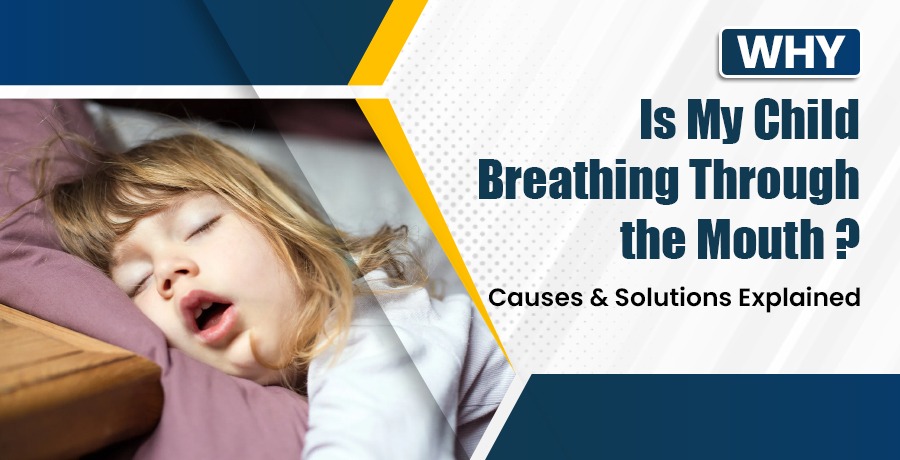
Why Is My Child Breathing Through the Mouth? Causes & Solutions Explained
09 Apr 2026
As a parent, you can spot even the small details about your kid’s well-being from how they eat to how they sleep. For example, if you notice a child who is always mouth-breathing but not nose-breathing (with the exception of respiratory or allergy issues that change quickly), you may start to become alarmed.
Though it might appear to be an innocent behavior, chronic mouth breathing for kids can have significant pedagogical consequences on their teeth, facial structure and sleep cycle. If you’ve been looking for answers, here’s a guide to the causes, risks and when to consult an ENT doctor for child breathing problem in Delhi.
Is Mouth Breathing Normal?
We should be breathing through our nose, ideally. The nostrils naturally filter air, warming it up and humidifying it before it enters the lungs. Though occasional mouth breathing (due to a cold, for example, or in the course of heavy exertion) is perfectly normal, chronic mouth breathing — particularly a child sleeping with their mouth open — suggests an underlying obstruction.
Common Mouth Breathing Causes in Children
If your child is a “mouth breather,” it’s almost invariably because their nasal passage is blocked or narrowed. And here’s a list of the most common:
Enlarged Adenoids or Tonsils
This is the main reason kids' mouths breathe. Adenoids are patches of tissue located high in the throat, behind the nose. When the tonsils become infected or naturally enlarge, they can obstruct the airway, leaving the child having to breathe through their mouth just to obtain adequate air flow.
Enlarged adenoids and tonsils are a common reason, and proper adenoid and tonsil treatment in Delhi can help restore normal breathing.
Nasal Allergies (Allergic Rhinitis)
Dust, pollen, pet dander or mold allergies can cause the lining of the nose to become swollen (inflammation). This congestion makes nasal breathing laborious, resulting in a chronic mouth breather.
Deviated Nasal Septum
When the thin wall separating the nostrils (the septum) is crooked or pushed over to one side, airflow can be impeded. Sometimes present from birth, or can be due to a minor nose injury whilst playing.
Chronic Sinusitis
Chronic sinus infections can also cause chronic nasal congestion, causing the mouth to become the “path of least resistance” for breathing.
Habitual Mouth Breathing
Sometimes, even after an underlying physical problem (like a cold) has been resolved, kids continue to mouth breathe due to habit.
Why You Should Address It Early
Untreated mouth breathing is more than just "noisy breathing." If left unaddressed, it can lead to:
- Recurrent Sore Throats: Mouth breathing bypasses the nose's natural filtration, causing the throat to become dry and irritated, leading to "off and on" sore throats.
- Hearing Impact: When enlarged adenoids block the Eustachian tubes (the connection between the ear and throat), it can lead to fluid buildup in the ears, causing muffled hearing or frequent ear infections.
- Dental Issues: Narrowed jaw arches and crowded teeth (sometimes called "long face syndrome").
- Sleep Disruption: Poor sleep quality leading to irritability, lack of focus, and daytime fatigue.
- Reduced Quality of Life: In the long term, the combination of poor sleep, dental misalignment, and hearing issues can significantly affect a child’s physical development and academic performance.
Mouth Breathing Treatment in Children
The treatment is completely dependent on the underlying cause. A specialized ENT evaluation is the path toward recovery. Common treatments include:
- Medication: Nasal steroid sprays, or antihistamines if allergies are the main trigger.
- Adenoidectomy or Tonsillectomy: If enlarged tissues are physically obstructing the airway, a surgical procedure to remove them often provides immediate relief and restores normal breathing patterns.
- Surgical Correction of Nasal Obstructions: In cases where a child has a grossly deviated nasal septum or other structural deformities that severely impede airflow, surgical intervention may be necessary to straighten the passage and allow for healthy nasal breathing.
- Orthodontic Intervention: If the mouth breathing has already begun to affect the jaw structure, an ENT may work with an orthodontist to ensure the airway remains open..
Consult the Best ENT Doctor for Child Breathing Problem in Delhi
If you notice your child snoring, waking up with a dry mouth or having to wake up constantly gasping for air, please seek help from professionals. Taking action early means your child grows healthy, sleeps well and avoids lifelong oral health problems.
At Ent Specialist In Delhi, we specialize in pediatric ENT care, offering advanced diagnostics and personalized treatment plans for breathing disorders.
A breathing habit should not stop your child from growing up well. Schedule a consultation today!
Opening Hours - Sir Ganga Ram Hospital
- Monday - Friday
6:00 PM - 8.00 PM
Opening Hours - Clinic
- Monday
10:30 AM - 12:30 PM
- Wednesday
10:30 AM - 12:30 PM
- Saturday
10:30 AM - 12:30 PM
Patient Testimonials

Piyush Goel
IT Professional
I was suffering from severe cough, cold and headache. I consulted with so many doctors, but did not get relief. My friend told me about Dr. Satinder and I consulted with him. He gave five days medicine for these symptoms. Surprisingly, I got relief in two days only. I am thankful for his great treatment that he had given to me. Thanks a lot.

Ravinder Pal Singh Sethi
IT Professional
I can't explain how much pain I was going through due to the mump at right side of my face. I got really scared as ear & throat both were paining. My boss suggested Dr. Satinder Singh, ENT specialist. Really Thanks to him for such a kind support and treatment. Within a day I was relived from the pain.

Few days back, got ulcers on the throat due to which unable to even inhale or eat or drink anything. Come to Dr. Satinder and really it was really a safest and quickest treatment i got and started normal diet within 3 days.